
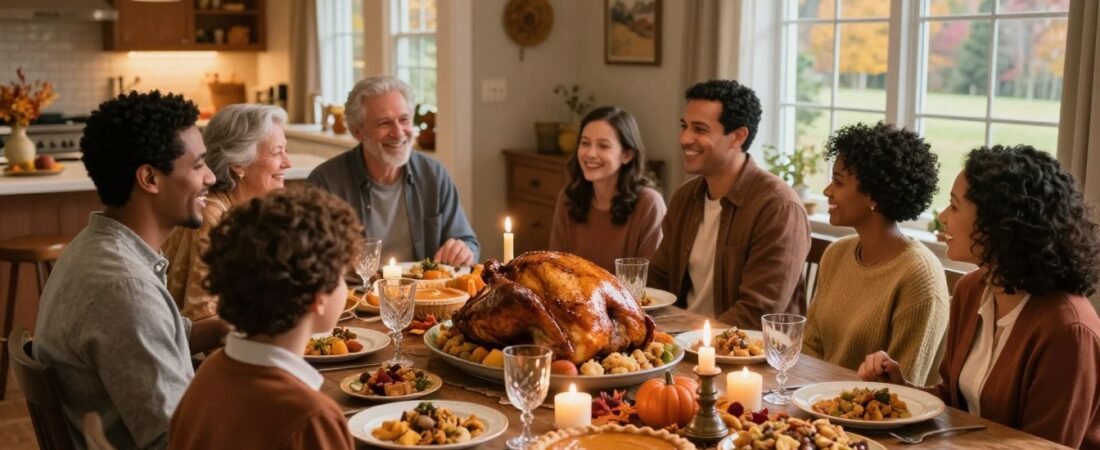
Thanksgiving is an annual U.S. holiday centered on gratitude, a shared meal, and time with loved ones. Its history spans community traditions, national decisions, and experiences that remain painful for some people. In the United States, Thanksgiving is a federal holiday, and in 2026 it falls on November 26.
For many households, the day offers a pause to give thanks and connect with family or friends. For others, its familiar story recalls Indigenous loss and the lasting effects of colonization. Both realities belong in an honest account of the holiday.
This history explains how a harvest celebration became an annual observance, what people do today, and why the day carries different meanings. It also makes room for people who feel joy, grief, or both.
Key Takeaways
- Thanksgiving is a federal holiday in the United States.
- The 1621 event was a harvest gathering, not an annual holiday.
- National observances developed over many years.
- Celebrations and feelings about the day differ.
- Present-day gratitude can coexist with honest history.
Its familiar traditions carry meanings that can differ sharply from one person and community to another.
What Is Thanksgiving?
In the United States, Thanksgiving is the annual federal holiday set aside for gratitude and gathering. The federal observance gives people a shared day to pause, reflect on the year, and spend time with family or friends.
Thanksgiving is a federal holiday in the United States. Many people treat the day as a chance to express thanks, whether through a meal, a quiet moment, or a visit with loved ones. Others observe it in ways shaped by faith, culture, or personal experience.
U.S. Thanksgiving falls on the fourth Thursday in November.
The U.S. date differs from Canada’s Thanksgiving, which is observed on the second Monday in October. The two countries share a holiday name and a focus on gratitude, but their observances have separate histories and calendar dates.
Thanksgiving Day is also a point of reference for the wider holiday season in the United States. Its timing brings family schedules, work breaks, and community events together on a Thursday, while leaving the date itself to shift each year.
Its fixed weekday gives the holiday a familiar place in the calendar, even though its calendar date changes from year to year.
The 1621 Harvest Gathering at Plymouth
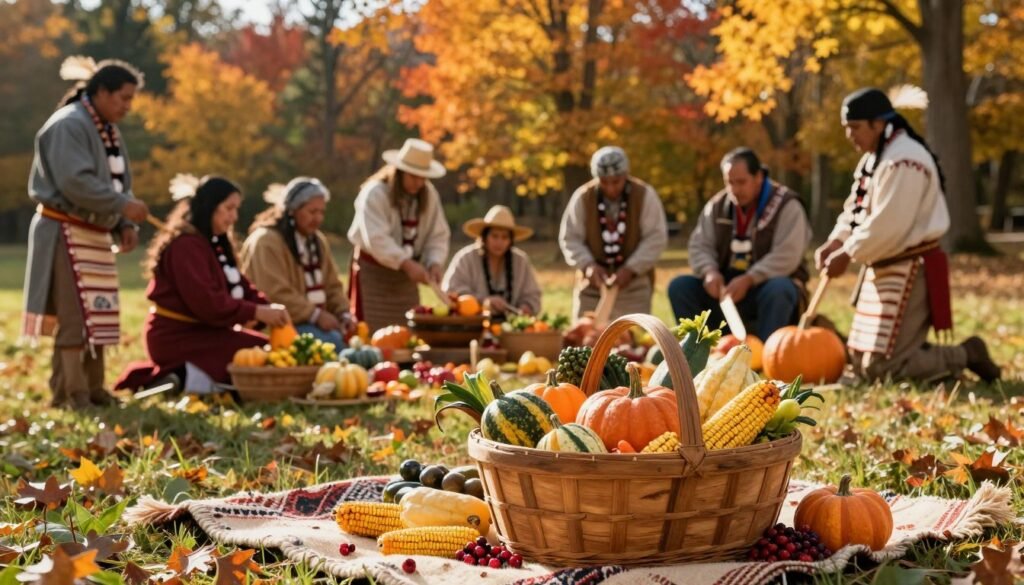
The gathering later called the First Thanksgiving took place in autumn 1621 on Wampanoag land at Plymouth. It was a harvest celebration involving Wampanoag people and English colonists, not the start of an annual holiday.
The gathering lasted three days, and it took place amid an alliance shaped by survival and unequal power. Its later name can obscure the people, land, and circumstances surrounding the event.
Wampanoag Land and the 1621 Alliance
The celebration happened at the site of Patuxet, in what is now Plymouth, Massachusetts. This was Wampanoag land. Epidemics associated with European contact had killed many Indigenous people in the region, devastating communities before the English settlement took hold.
The Wampanoag-English alliance had been established in March 1621. Wampanoag knowledge of hunting and planting helped the settlers survive and produce a harvest. The gathering followed that alliance, but it should not be mistaken for proof of lasting peace or equal power.
What Edward Winslow Recorded
Edward Winslow’s letter is the only surviving eyewitness account. It appeared in Mourt’s Relation in 1622. Winslow wrote that four English men hunted enough fowl to feed the settlement for almost a week, and Wampanoag participants brought five deer.
At least 90 Wampanoag people and 52 English colonists attended. Of the 102 Mayflower passengers, about half were alive for the gathering: 24 men, five women, and 24 children and teenagers. The account describes food and activity, not a formal Thanksgiving service.
From Harvest Gathering to Later Memory
The event was not called Thanksgiving at the time, and it did not become a yearly observance. Later generations connected the gathering to the holiday as national ideas about the Pilgrims and the country changed.
That memory often turns a complex encounter into a simple story of friendship. The Wampanoag people were active participants, not supporting characters in a tale about English settlers alone. The surviving account offers only a limited view of the event, so careful retellings distinguish what Winslow recorded from later traditions.
Treat the harvest gathering as one important episode, rather than as the start of an uninterrupted annual tradition.
How Did Thanksgiving History Shape the National Holiday?
Before Thanksgiving had a fixed national date, communities called special days of prayer and thanks for particular occasions. These national thanksgiving observances grew from local and religious practices, not directly from the 1621 gathering.
The federal holiday took shape through repeated proclamations and later congressional action.
Thanksgiving Before the United States
In New England, communities held days of thanksgiving and fasting for military victories or relief from hardship. These religious observances were called when local leaders believed an occasion deserved prayer or public reflection.
During the Revolution, the Continental Congress called for a national day of thanksgiving after the American victory at Saratoga. George Washington proclaimed December 18, 1777, as the observance date. Congress issued national Thanksgiving proclamations from 1777 through 1784, but none from 1785 through 1788.
The dates and purposes varied, so early proclamations did not create a permanent holiday.
Washington, Hale, and Lincoln
In 1789, the first Federal Congress asked the president to recommend a national day of thanksgiving. George Washington proclaimed Thursday, November 26, 1789, a day of public thanksgiving. This did not establish a lasting federal holiday, and early presidential observances fell in different months and on different dates.
Sarah Josepha Hale campaigned for decades for a national Thanksgiving holiday, believing a shared observance could help unite Americans. Her effort met a country divided by the Civil War, when national unity was especially contested.
On October 3, 1863, Abraham Lincoln issued a proclamation setting Thanksgiving for the last Thursday in November. His action helped establish an annual observance. School pageants later spread Pilgrim imagery and shaped how generations pictured the holiday’s past.
The Date Becomes Uniform
In 1939, Franklin D. Roosevelt moved Thanksgiving to the second-to-last Thursday in November to extend the Christmas shopping season. The change created two observance dates in parts of the country for two years, affecting businesses, families, and state practices.
Congress settled the schedule in 1941. Roosevelt signed the resolution establishing the fourth Thursday in November as the federal holiday on December 26, making the observance uniform across the country.
| Date or period | Event | Significance |
|---|---|---|
| 1777-1784 | Continental Congress issued proclamations | National days of thanks began during the Revolution |
| 1785-1788 | No national proclamations | The observance was not yet annual |
| 1789 | Washington proclaimed November 26 | A public observance, not a permanent federal holiday |
| Decades-long Hale campaign; 1863 | Lincoln proclaimed the last Thursday | An annual national observance took hold |
| 1939 and 1941 | Roosevelt shifted the date; Congress set the rule | The fourth Thursday became uniform |
The fourth Thursday in November became the stable federal rule in 1941.
How People Celebrate Thanksgiving Today
A Thanksgiving gathering usually centers on a shared meal, though menus and activities differ among households. The food may reflect family, faith, or community traditions.
A traditional meal often includes turkey, side dishes, and dessert. Some households keep a familiar menu, while others serve foods tied to their family histories or choose a meal that fits their needs.
The Shared Meal
Common dishes include:
- Turkey
- Stuffing
- Potatoes
- Vegetables
- Cranberry sauce or gravy
- Pumpkin pie
Roast turkey is a common centerpiece, but no single dish defines every celebration. Some meals are small and simple; others bring a large group together around several courses.
Gatherings, Games, and Community Customs
Family and friends may gather to eat, talk, and reflect on what they feel grateful for. Some attend religious services or take part in charitable food and meal efforts. Others build the day around football, games, or time outdoors.
Thanksgiving weekend celebrations in some cities and towns include parades. In many areas, festivities also mark the opening of the Christmas shopping season. These customs vary by place and household, and participation is a choice, not a requirement.
For some people, the most meaningful part is a quiet conversation or a call to someone far away. Others welcome a busy house. A gathering can include long-standing rituals and new customs that better fit the people present.
Travel and Holiday Costs
Thanksgiving travel can bring road congestion and overcrowding. For 2026, AAA projected that 81.5 million Americans would travel at least 50 miles from home between November 24 and November 30.
AAA projected 72.9 million travelers by car, 5.96 million on domestic flights, and 2.6 million by bus, train, or cruise. The trip may mean packed roads and busy terminals.
The average cost of a Thanksgiving dinner for 10 in 2026 was $58.63, or $5.86 per person, up 6% from 2025. A 16-pound frozen turkey averaged $23.68, an increase of $2.38 from the previous year.
| Region | Average cost of dinner for 10 | Position relative to the U.S. average |
|---|---|---|
| Northeast | $61.57 | Above $58.63 |
| West | $58.74 | Above $58.63 |
| Midwest | $56.89 | Below $58.63 |
| South | $54.33 | Below $58.63 |
The holiday’s practical demands can include crowded roads and the work and expense of preparing a meal.
Why Thanksgiving Matters to People
For many people, Thanksgiving matters because it creates a familiar occasion to gather, reflect, and express gratitude. The tradition can make room for connection in a busy year, whether people meet in person or reach out from a distance.
A shared ritual can help people feel connected across generations. Families may return to a familiar routine, tell stories, or remember relatives who are no longer present. Those patterns can offer continuity without requiring everyone to celebrate in the same way.
Some people observe the day through religious practice or prayer. Others focus on friendship, family, or the chance to pause and name what they value. For many, giving thanks is a personal act rather than a formal ceremony.
Sarah Josepha Hale imagined a national Thanksgiving as a tradition that could unite Americans. That vision gave the holiday a civic purpose as well as a personal one. Yet people’s experiences have never been identical, and the meaning of a national observance can shift across generations.
Some households use the day to reconnect after months apart. Others choose a smaller gathering or a new ritual that feels more comfortable. The value of a tradition can rest in the people who keep it, not in a prescribed menu or schedule.
A day of thanks does not need to erase disagreement or hardship. People can appreciate a relationship, a meal, or a moment of rest while still recognizing that the holiday means something different to someone else.
Its meaning can come from the relationships and values people bring to the day, rather than from a single shared experience.
Painful Memories Connected to Thanksgiving
For some Native Americans, Thanksgiving brings the history of colonization and land loss into a day otherwise framed around gratitude. That history is painful and cannot be reduced to the story of one harvest gathering.
Thanksgiving can carry very different meanings for people whose communities experienced dispossession and cultural erasure. Acknowledging those experiences does not require others to abandon gratitude or family traditions.
The Indigenous History Behind the Holiday
Within a generation of the 1621 gathering, war erupted, and the Wampanoag lost political independence and much of their territory. The alliance had not guaranteed lasting peace. Later policies brought further forced displacement and loss.
The Indian Removal Act of 1830 led to the forced displacement of tens of thousands of Indigenous people from their homelands. Indigenous landholdings fell from about 138 million acres in 1887 to 48 million acres in 1934. These harms form part of the history that the national holiday’s simpler stories often leave out.
The National Day of Mourning
The National Day of Mourning began in 1970 after Wamsutta Frank James, an Aquinnah Wampanoag activist, refused to deliver a revised speech at an event marking the 350th anniversary of the Pilgrims’ arrival. Indigenous people and supporters gathered in Plymouth on Thanksgiving instead.
Since 1970, Indigenous people and allies have gathered at noon on Thanksgiving at Cole’s Hill in Plymouth. The event honors Indigenous ancestors and resilience and protests lost Native lands, the destruction of Indigenous lives and cultures, and continuing racism and oppression.
The National Day of Mourning honors Indigenous resilience while protesting dispossession and continuing oppression.
Its observance makes visible a perspective that is often missing from familiar holiday traditions. The gathering is not a rejection of every person’s gratitude; it is a public act of remembrance and protest.
Grief and Family Stress
Historical harm is not the only reason the holiday can hurt. A family-centered day may intensify feelings that already exist, especially when someone is grieving, isolated, or under pressure to appear cheerful.
- Grief
- Loneliness
- Anxiety
- Family conflict
- Financial pressure
- Emotional exhaustion
People can feel grateful and sad at the same time. A missed loved one may come to mind during a familiar tradition, and money worries can make hosting feel heavy. No one needs to perform a single approved emotion to belong in the room.
Making room for different feelings lets people approach the holiday without requiring everyone to experience it in the same way.
Conclusion
Thanksgiving can hold gratitude, connection, and difficult history at the same time. A tradition does not need a simplified past to offer people a reason to gather or reflect.
Honest remembrance can sit beside present-day thanks. At your next gathering, share the history thoughtfully and listen to the different meanings people bring to the day.